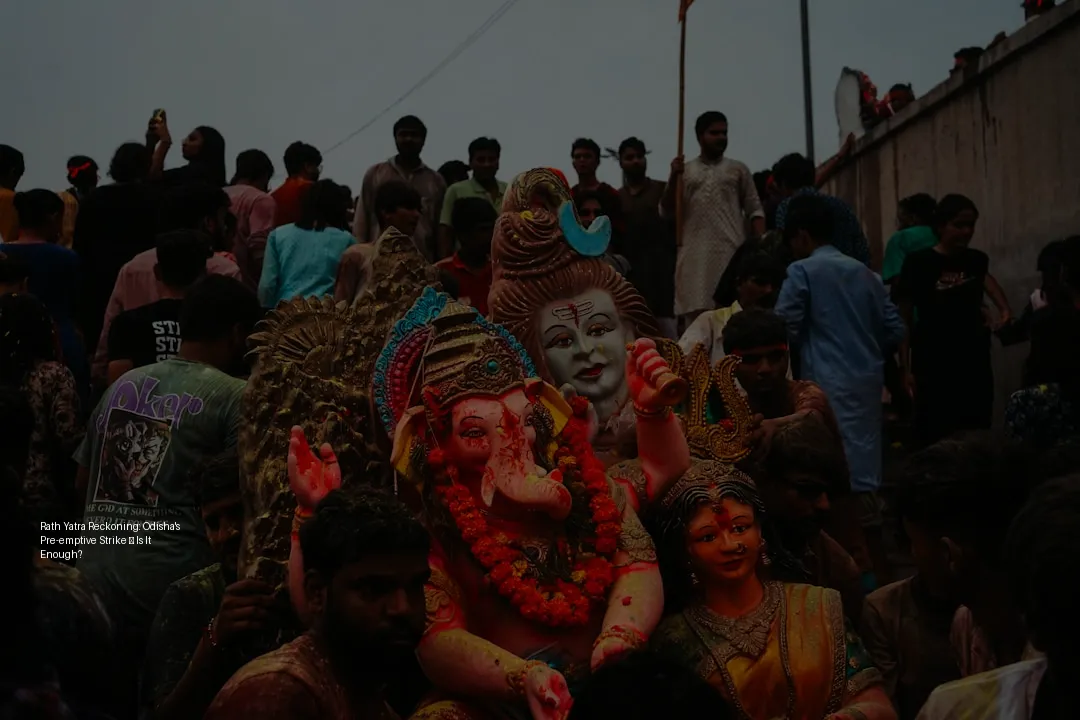
The Aftershock: Last Year’s Stampede and the Urgent Need for Change
Let’s be blunt: the 2023 Puri Rath Yatra stampede wasn’t just an unfortunate incident; it was a systemic failure. A preventable tragedy. The sheer chaos, the inadequate crowd management – yaar, it was a mess. The Odisha government can’t afford another one. This isn’t about religious sentiment; it’s about basic public safety and accountability. The optics alone are devastating, but the potential for loss of life is far worse.
7 Months Early? A Good Start, But…
So, 7 months in advance? Accha, it’s better than waiting till the last minute, hai na? The Hindu report highlights increased coordination between police, fire services, and health departments. They’re talking about CCTV coverage, crowd control barriers, and dedicated medical teams. Sounds good on paper, boss. But let’s not get carried away.
My concern? This feels largely reactive. It’s a band-aid on a deeper wound. Are they really addressing the root causes of the chaos? Last year, it was a perfect storm: massive crowds, narrow pathways, and a lack of effective communication. Simply adding more CCTV cameras doesn’t solve the problem of people pushing and shoving. We need a fundamental rethink of crowd flow, entry/exit points, and emergency response protocols.
The Devil’s in the Details: Key Areas of Scrutiny
Here’s what I’m watching closely:
- Crowd Density Modeling: Have they actually done a proper simulation to predict peak crowd density and identify potential bottlenecks? Just saying they’ll have ‘crowd control’ isn’t enough. Dekho, data-driven planning is crucial.
- Communication Strategy: How will they communicate with the seva dal and the general public in real-time? A single loudspeaker isn’t going to cut it. We need multilingual announcements, digital signage, and potentially even a dedicated mobile app.
- Emergency Evacuation Plans: What’s the plan if something does go wrong? Are there clearly marked evacuation routes? Are medical personnel adequately trained to handle mass casualty events? Seriously, this needs to be rock solid.
- Local Stakeholder Engagement: Have they consulted with local communities, temple authorities, and religious leaders? Ignoring their input is a recipe for disaster. Samajhdaar people know that local knowledge is invaluable.
Beyond the Surface: Political Implications and Future Risks
This isn’t just about the Rath Yatra. It’s a test of the Odisha government’s ability to manage large-scale events and ensure public safety. A successful Rath Yatra will boost their image; a repeat of last year’s tragedy will be politically devastating. Bilkul.
Furthermore, the increasing popularity of religious tourism in India presents a growing security challenge. We need to learn from Odisha’s experience and develop national standards for crowd management at major religious gatherings. Otherwise, we’re just waiting for the next disaster to happen. Bas, it’s that simple.